"Where Are You From?" Why It's Hard for Culturally Blended Kids
For a lot of children, "Where are you from?" is an easy question with an easy answer. But for kids growing up across multiple countries and cultures, it can stop them cold — not because they don't know who they are, but because the question itself doesn't fit their life. That was the moment I found myself in the front seat of a car outside a school in Dubai, watching my nine-year-old daughter try to answer a question I didn't have a real answer for either.
In this article: → Why does this question feel impossible for some kids to answer? → What do you say when you don't have the answer either? → What's the real question behind "Where are you from?" → The day the question changed everything
Why Does "Where Are You From?" Feel Impossible for Some Kids to Answer?
For a child who's grown up in one place, "where are you from" has an obvious answer. Ask, answer, done. But for a child born in one country, connected to another by family, and raised entirely somewhere they don't even hold citizenship, there's no single place to point to. The question assumes something that simply isn't true for their life — that home, birthplace, and citizenship all line up in one tidy answer.
Culturally blended kids run into this constantly, and it's rarely dramatic. It shows up in small moments — a school form, a new classmate's question, an essay prompt — that ask for one answer when the honest answer has three or four parts to it. Multiply that by every school year, every new friend, every "so where are you really from," and it adds up to something a lot heavier than the question itself suggests.
If this is the tension you're sitting in right now as a parent, you're not alone — this is exactly what we work through in 1:1 coaching.
What Do You Say When You Don't Have the Answer Either?
Here's the part most parenting advice skips over: sometimes you don't have a tidy answer for your child either. You can know your child better than anyone in the world and still not have language ready for a question like this, because you've never had to answer it about yourself the way they're being asked to answer it about themselves.
Sometimes the most honest thing a parent can do is admit they need to think it through too. That's not a failure of parenting — it's often the moment real understanding starts, for both of you. Sitting in the not-knowing together, rather than rushing to hand over an answer that doesn't quite fit, is usually more valuable than getting it "right" on the first try.
What's the Real Question Behind "Where Are You From?"
Reframed, the question isn't really about geography at all. It's asking: what's the story of you?
That shift — from place to story — is at the center of narrative identity, the idea that we come to understand who we are through the story we tell about our own life, not through a checklist of facts like birthplace or passport. For a culturally blended child, geography was never going to be a clean answer, because geography isn't actually what the question is trying to get at. Once a child (or a parent) can see that the real question is about story, not location, the pressure to produce one correct answer starts to ease. There isn't a wrong answer to "what's the story of you" — there's just your answer, and it's allowed to be layered.
That reframe is often the difference between a child feeling stuck on a question and a child feeling free to answer it in their own words.
The Day the Question Changed Everything
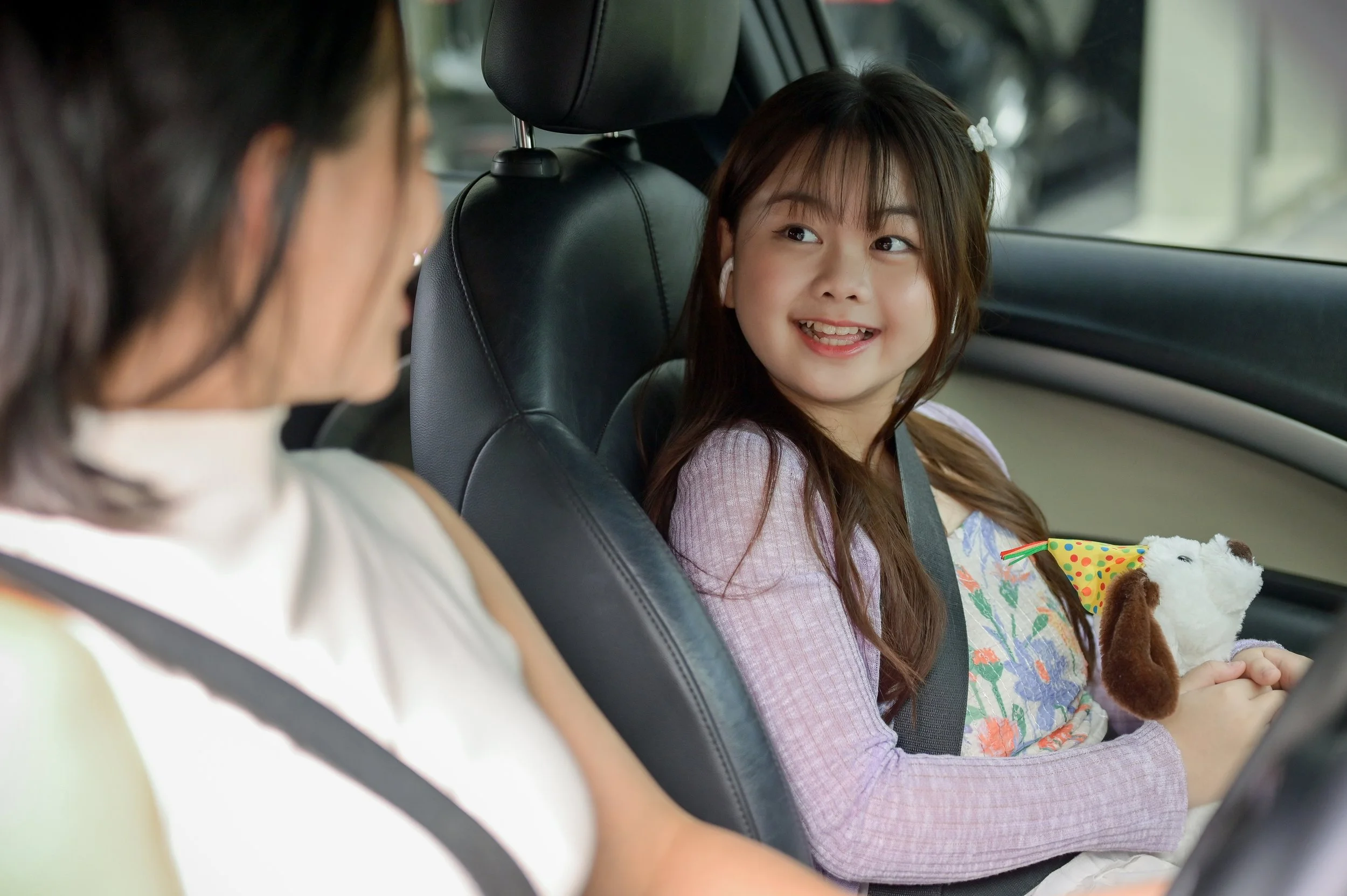
It was International Day week at my daughter Ashley's school in Dubai — the week the school leaned hardest into celebrating where everyone in that classroom came from. Flags on the walls, food from a dozen different countries, kids in clothing tied to their family's heritage. It's a wonderful week, in theory. For a lot of kids, it's the easiest week of the year to talk about identity, because the answer is right there on a flag.
For Ashley, it was the week the essay came home: Where Are You From? One page. Due Friday.
She wasn't upset about it exactly — she just sat with it. Turned it over. Started sentences and abandoned them. By the time I picked her up that afternoon, she still hadn't written a word, and she brought the blank page into the car with her.
"I don't know what to put," she said, somewhere between the school gate and the first traffic light. "I don't know where I'm from."
My first instinct was the instinct most parents have — to just answer it for her. Give her the sentence. New Zealand, obviously, that's where her passport is from. But even as I opened my mouth to say it, I knew it wasn't true in the way that mattered. She'd never lived in New Zealand for more than a few weeks at a time. She didn't have citizenship in Dubai, where she'd spent most of her school years and where her friends were. She had another country entirely tied in through family. There wasn't a version of "where are you from" that was going to fit on one line of an essay without leaving out something true about her.
So instead of answering, I asked her what she meant. Not "what's confusing about the question" — just, genuinely, what did she think it was actually asking. And she said something that's stayed with me since: she didn't think it was really asking where she'd been. She thought it was asking her to explain herself — and she didn't know how to do that in one place-name.
We didn't solve it in the car that day. What we did instead was start talking about her life less like a location and more like a story — the places, yes, but also what each of them had given her, what she carried from each one, what made her her rather than just where she'd stood at different points on a map. By the time we got home, she still didn't have her essay answer. But she had a different question to sit with, and so did I: not where is she from, but what's the story of her — and how do you teach a nine-year-old that both questions can live in the same essay.
That question is the one this entire course grew out of.
If this is a question your own child has asked — or one you're still quietly asking yourself about your own life — my course for parents raising culturally blended kids, Parenting a Culturally Blended Child, works through exactly this: how to help your child (and yourself) move from feeling stuck on the question to feeling free to answer it in your own words.
If you'd rather watch than read, this story is also on YouTube.